Interview by Peter Ward
Alex’s Links
https://www.ebay.com/str/ultimategamersvault
https://www.instagram.com/ultimategamersvault?igsh=MWdvNHp4NnE4Mm00cQ%3D%3D&utm_source=qr
https://youtube.com/@ultimategamersvault?si=lBzHWabD9ShgiLD1
Led SEGA’s #1 Dreamcast Launch Store (9/9/99) Gaming Retail & Launch Leader
RGM: Every gamer has that “lightning bolt” moment where they realized this wasn’t just a toy, but a life-long obsession. What was the first system that hooked you, Alex, and what was that one game that made you realize you were “one of us”?
My first console was the Atari 2600, and I played pretty much anything I could get my hands on. Combat, Megamania, Pitfall, all of it. But when the NES came out with Super Mario Bros., that’s when it really hit me. It just felt different right away.
Then The Legend of Zelda took it to another level. That was the one where I started thinking about the game even when I wasn’t playing it. I remember being at school talking with other kids about how far we got, who found what. This was before the internet so talking in person to get tips and hints made us feel a bit more connected about something we loved. It felt like we were all in on the same thing even if we didn’t really say it out loud.
I was also weirdly fascinated by the controller. The directional pad felt so precise compared to what I was used to. Later on I learned Gunpei Yokoi designed it, and that made a lot of sense.
But if I’m being honest, Phantasy Star on Sega Master System is what cemented it for me. I’d sit there reading the manual at night, looking at the characters, weapons and armor like it was something important. That’s when I knew this wasn’t just something I liked. It made me a gamer for life.
RGM: We often talk about the “Halcyon Days” of gaming on the site. For many, that peak was the era of the Midnight Launch. Can you take us back to one of those nights? The cold air, the smell of fresh manual ink, and that specific camaraderie of standing in line at 11:58 PM—what is the most vivid memory you have of a launch party?
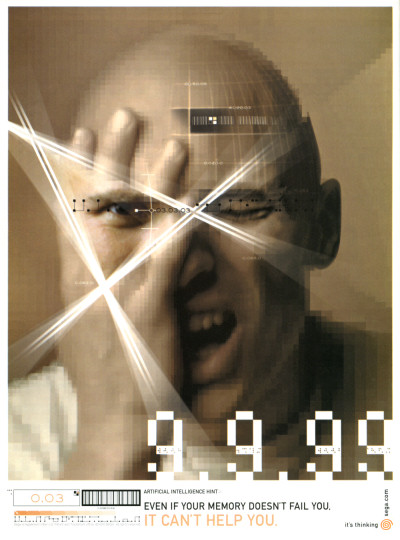
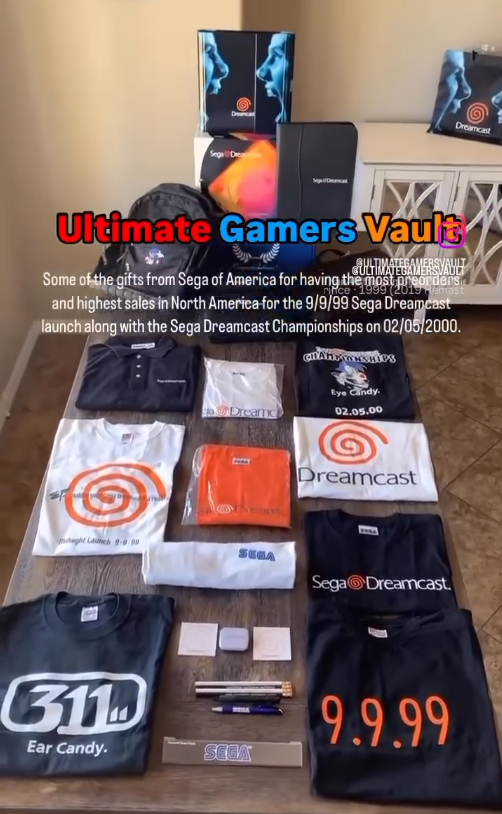
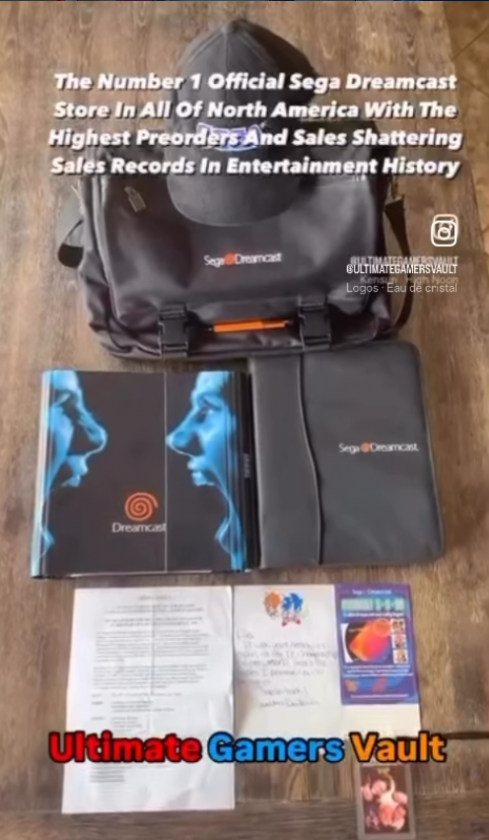
The one that always comes to mind is the Dreamcast launch on 9 9 99. I led SEGA’s official top launch in the U.S. at my EB Games store, and it’s still the most intense and fun experience I’ve had in retail.
We had been building preorders for about a year, so we knew it was going to be big, but once that night started, it took on a life of its own. After the mall closed, Sega brought in a large number of Dreamcast kiosks and we set them up in the food court. We had tournaments running, people crowding around, reacting to everything. You could feel the noise and energy building as it got closer to midnight.
Right before we opened, a few of my friends showed up and decided to mess with me. They held the 9-9-99 shirts upside down so it changed to 66 6 6 and folded them to say 666. I remember seeing that and just thinking, of course, this is happening right now. My team got a kick out of it.
We stayed open until a little after 6 in the morning. Last customer walked out with the sun coming up. I had been up for something like 55 hours straight.
Looking back, it didn’t feel like work. It felt like we were part of something that people were going to remember forever.
RGM: You were right there in the thick of it during the turn of the millennium. February 2000, the Sega Dreamcast Championships. That was a high-water mark for Sega fans. What was the atmosphere like on the floor? Was there a sense that we were looking at the future of online gaming, or were we all just too busy marveling at SoulCalibur and Crazy Taxi?
It was loud, packed, and honestly a bit chaotic in a good way. Sega Gameworks on the Las Vegas Strip was full, and everyone was waiting for the band 311 to come on. Some people were chanting for 311 others were chanting for Sonic, which kind of summed up the whole scene.
There was a Sonic Adventure tournament going on and people were really into it. It felt like one of those nights where nobody wanted it to end.
Crazy Taxi had just come out, so everyone was talking about that too. It felt like everything was hitting at once.
At the time, there was this feeling that things were changing. Online features like rankings and ghost data were starting to show up, and you could tell something bigger was on the horizon.
I’ve sill kept my Dreamcast championships VIP badge as a nostalgic memory.
RGM: Meeting Yuji Naka is a bucket-list moment for any Sega devotee. When you came face-to-face with the man behind Sonic and Phantasy Star, what struck you most about him? Did he seem to grasp the sheer weight of the “Dream” Sega was broadcasting to the world at the time?
The moment I always think about was at the Dreamcast Championships in Las Vegas. I was standing near the entrance to the room where Yuji Naka was sitting, when representative from Sega went over and spoke to him about my stores Dreamcast launch.
He turned, looked at me, pointed, and told me to come in. I remember kind of freezing for a second before walking in.
He signed a Sonic Adventure Limited Edition for me with cover art that was never released. That instantly became one of those pieces I’ll never let go of.
Even though he couldn’t speak English and I couldn’t speak Japanese it was a very memorable moment. What stood out was how calm he was. Not flashy, not trying to impress anyone. Just very steady and confident.
RGM: You’ve often been described as a gamer who “broadcast Sega’s dreams” to the masses. Looking through your professional lens, what’s a “behind the curtain” story from the Dreamcast era that the average gamer at home never got to see? Give us a bit of that inside track!
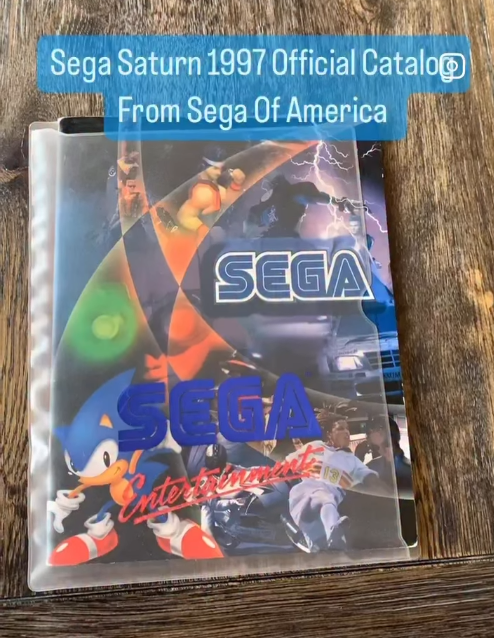
Honestly, the part people didn’t really see was how much belief and uncertainty were happening at the same time.
From the outside, everything looked setup for success. Great marketing, a strong lineup of games, packed stores. Behind the scenes, it felt more like we were pushing something forward and hoping it landed the way we believed it could.
At the store level, it wasn’t just about selling a console. We felt like we were representing where Sega was trying to go. Things could change quickly. Messaging, priorities, sometimes overnight. You just adjusted and kept going.
And that launch day, 9-9-99, was intense. Midnight opening, long lines, constant questions. It felt more like running an event than working in a store.
Looking back now, it really does feel like an all in moment. We were right in the middle of it while it was happening, without knowing how it would all play out.
RGM: The Dreamcast is often called the “beautiful loser” of the console wars—ahead of its time but gone too soon. As someone who lived it from the inside, why do you think that specific white box still holds such a massive emotional grip on the retro community today?
I think a lot of it comes down to how it felt at the time. It genuinely felt like something new. The visuals, the online features, the creativity across the games. The VMU was so cool it made playing games feel different, such as to train and nurture your Chao pet and picking plays on NFK so your opponent couldn’t see. Sega really put everything into it.
It also sits in a unique place. It feels like a bridge between older gaming and what came next.
For a lot of us, it felt like Sega was back. That feeling stuck, even after everything changed.
RGM: We love a bit of tech-talk here at RGM. If you had to pick one piece of “dead tech” or a peripheral from that 90s/00s era that you think deserved a second life, what would it be and why? (Are we talking VMU magic or something even more obscure?)
Light guns, those were just fun, plain and simple. It’s good to see them slowly coming back.
If I picked a console it would definitely be the Vectrex from 1982 as it was so different in that it was the only console to use vector graphics. The controller had the first real analog stick, and the all in one design was impressive. Unfortunately it was released close to the video game market crash of 1983 which led to its demise.
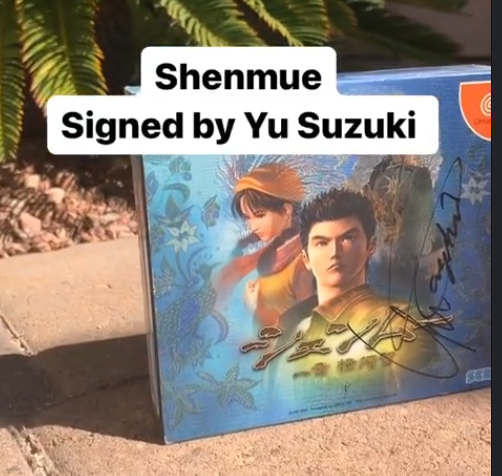
If there was a game it would definitely be Shenmue, it was such an epic story that in my opinion it’s a tragedy that we don’t have the conclusion.
RGM: Finally, Alex, the classic RGM closer: If you were stranded on a desert island with only one retro console and three games to last you a lifetime, what’s making the cut in your travel bag?
That one hurts a little. I almost went with the Saturn just for Panzer Dragoon Saga.
But I’d go with the Sega Master System. Phantasy Star, Shinobi, and OutRun. That gives me a mix of different genres. OutRun also means a lot to me because the graphics were colorful, bright and vivid. The music was perfect, gameplay precise and it felt like I was taking a road trip in a game. The super scaler technology still to this day gives a great sensation of speed. I am also grateful that Yu Suzuki personally signed my copy.