
Interview By Peter Ward Edit by Peter Ward, Andrew Fisher and Brian F Colin
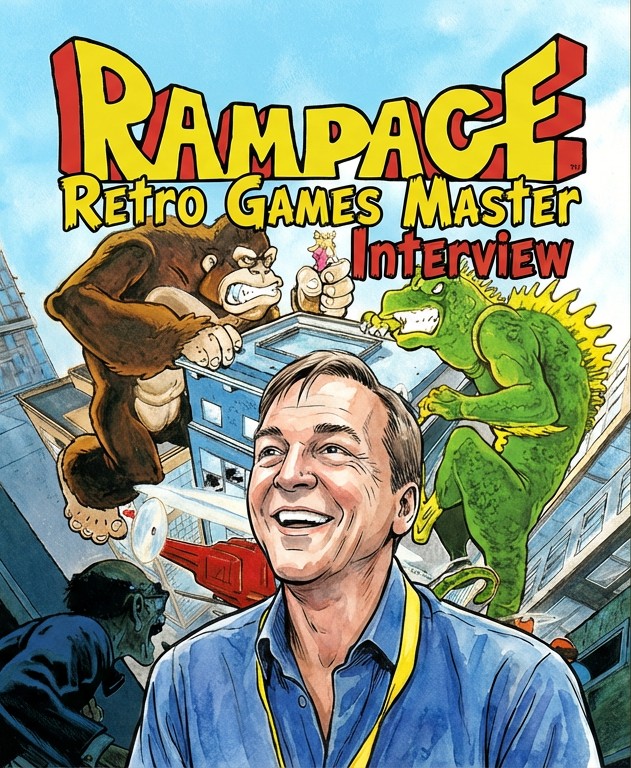
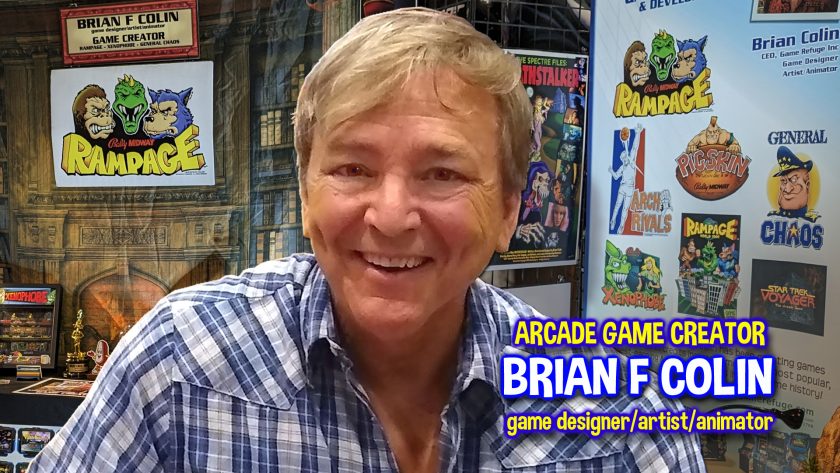
RGM: I’m absolutely delighted and thrilled to be joined by the true legend of the arcade era. From the pixelated destruction of Rampage to the gridiron grit of Pigskin 621 AD, Brian Colin has been responsible for some of the most charismatic titles in gaming history. Brian, thank you for joining us.
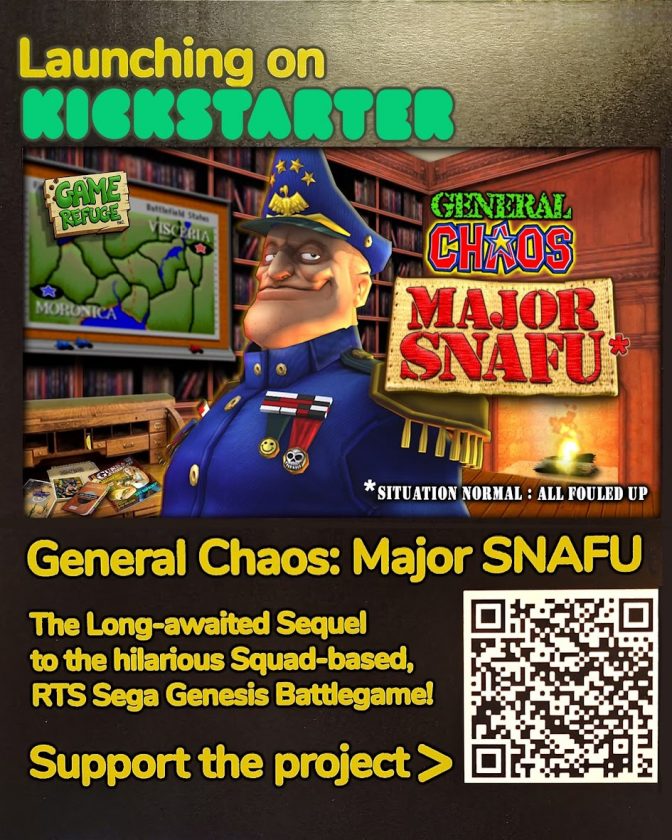
BC: Thank you for the kind words.
I think I’m more of a legend in my own mind, though, than in real life.
RGM: No, you’re a total legend, Brian. Believe me.
RGM: Looking back to the very beginning, how did you first break into the industry? Was the dream always to work in games? or did you simply find yourself at the right place at the right time with Bally and Midway?
BC: It’s more of the latter. I was a filmmaker. I went to school to make films.
I did a lot of films. I had an actress drop out of my senior thesis film because she dropped out of school. I could draw. I’d been doing newspaper ads and stuff. I did an animated film that won a lot of international awards. And I saw an ad for Bally Midway one day, and they were looking for an animator.
And I thought, what does a pinball company need with an animator? And I went in, and they said, “No we’ve seen your film. We want you to do animation for video games.” And I thought, really? Pac-Man?
Why would you need an animator to do something that simple? And I didn’t really want the job, but I was like, I just got out of college, I didn’t have any money. I was kind of working for free beer and pretzels. They called me, they offered me the job, and I remember I had some friends around me when I got the call, and I said, “That’s it” I took the job, and I said to my friends, I tried to make a joke out of it. “That’s it, childhood’s over. I’ve got a real job.”
And I was so wrong. It has never been anything like a real job, and childhood is still going on. It was the best possible thing that could have ever happened to me. And like you say, right place, right time. From within the first days I was there, it was wonderful.
RGM: Yeah, it sounds amazing. You know, I think that gaming and this sort of thing keeps us all young with the way things are right now.
RGM: With your early days, sort of with that, on your first day at Bally/Midway, who sort of
made you feel welcome in the company?
BC: People that were basically legends back then, but I didn’t know it. My first day, I was interviewed by Kevin O’Connor, who is a brilliant pinball artist who was the new head of the new animation department, and George Gomez, who (was) a mechanical engineer who (is now) now doing pinballs for Stern, and Sharon Barr Perry who was the main animator in their animation department. And they were all wonderful. They made me feel at home from day one.
RGM: Well, that helps you in every way. If you’re happy in your environment, you’re going to produce the best stuff, which obviously you’ve done, or I wouldn’t be talking to you now.
BC: It was great. It was the Wild West. Management left us alone. We were a bunch of kids.
We weren’t even in the main factory back then. We were in a little building off to the side, and we kind of would always just look at each other and say, “Can we do this? …Who’s going to stop us?”
It was great. Those were the best years.
RGM: What was your first project with Bally and Midway?
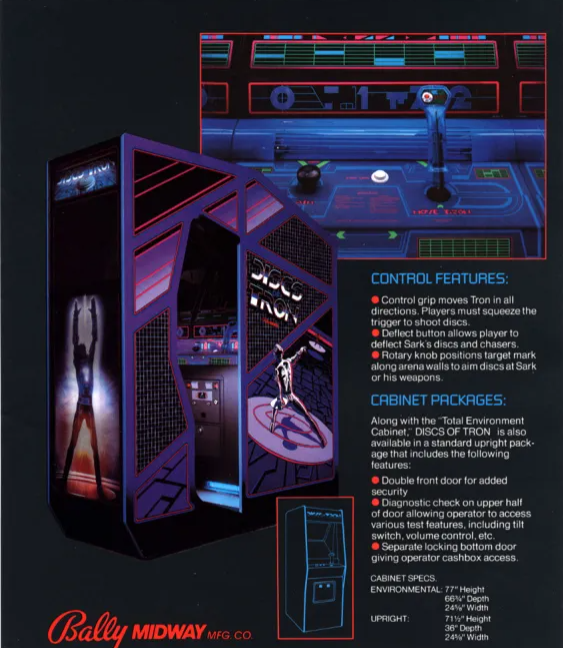
BC: I was lucky enough; the development team was brand new. They had only released Tron by then. And one of the games that was supposed to be in Tron was Discs of Tron. And that programmer wasn’t going to release it until it looked perfect.
And I believe that’s one of the reasons I was hired, because I did the animation for Discs of Tron. And he was a tremendous programmer, very precise, but he was open to suggestions. The beautiful thing about this as a filmmaker, I would work on stuff for weeks, and film for nights, and send away film back in the day and get it back, and there’s a mistake, (…and I had to start over). In this new environment, I’m working on something in the morning, I’m seeing it in the afternoon, and then I can say, “…slow that down a bit. You know what? Let’s add this little bit here.”
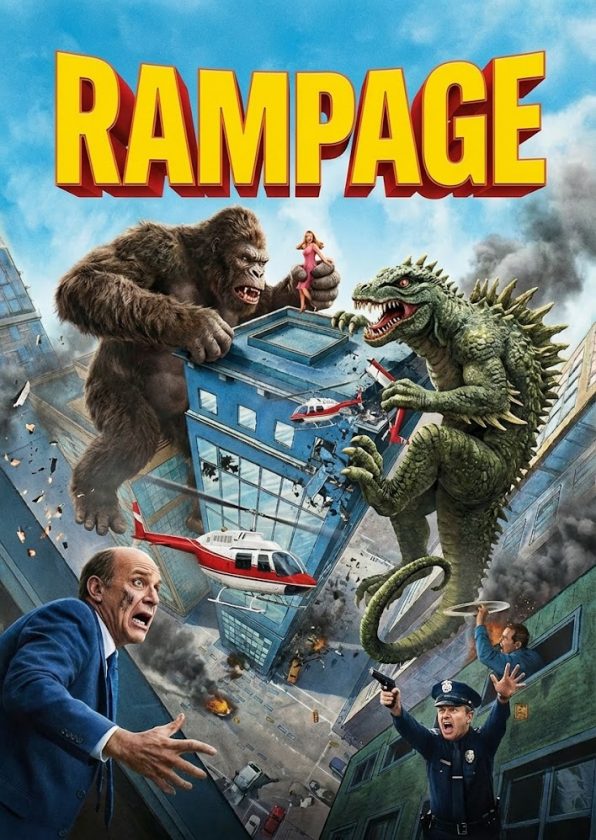
It was a dream come true because it was a creative challenge. I was doing what I like to do, and I was pushing the envelope every day. It was wonderful. My first project, to answer your question, was Discs of Tron, in that beautiful environmental cabinet that you stood up in, in the arcade, and it had this 3D effect.
RGM: I had no idea video games could do that. It was so ahead of its time. Sadly, I’ve not played that. I wish I had. I don’t know, they didn’t have that in the arcades in Dover.
I wonder if Arcade Club up in Bury has one of the biggest arcades in the UK, and has got one of them. Next time I’m up that way, I’ll have to check.
BC: Imagine a sit-down cabinet that you had to stand up in. It was almost 6 and a half, 7 feet tall. Speakers behind your head. It was gorgeous. You check it out.
RGM: Yeah, I will have to Google that one. Obviously, I know Tron, the movie, is a timeless classic of the 1980s, but yeah, that sounds amazing.
RGM: What is the funniest thing and the most frustrating thing that happened to you when you were working for the company?
BC: I was working at Bally Midway for 10 years. I worked on over a dozen games or more. The list of things that are funny and the list of things that are frustrating, they would take more time than we have this evening.
RGM: Some highlights would be fine.
BC: There wasn’t much frustration early on because, like I say, management left us alone. Later, as we did games that became more popular, management felt they had to check in more. I’m right, that’s the opposite of what you would think would happen. It gets frustrating when you are doing a space game and management says, put a witch on a broom there.
Or when I would say, hey, I can do this thing if you would give me this much more art space, spend a little more money, and they’d say “No”.
On the other hand, those same frustrations were the reason behind some of the best games I ever did and some of the most popular games I ever did, because the fact that they told me “No” had me going, “…there’s got to be a way I can figure this out”. The frustration leads to: “…Give me a box, let me push against it, and I’m going to find a way to do it”.
That’s the most fun thing about what I do for a living. The ideas are the easier part, the easy part. The tricky part, but the most fun, is finding a way to do it when they tell you can’t.
RGM: Well, yeah, it sounds like you’ve had highs and lows, but mainly highs by the sound of it, by the quality of the product, add them all up, it’s much more highs than lows.
BC: You learn from your mistakes. I mean, I’m known for my hits. I’ve made some turkeys, but you learn from those, and you apply what you learn to the next game.
RGM: I don’t know if there’s ever a turkey, there’s always somebody who loves it, loves one of the turkey games, too.
BC: The real turkeys never got released, believe me. You learn from them. I’ve got quite a few that are wonderful. But again, if you want to go into those, we can.
RGM: Let’s touch upon a couple.
BC: Management wanted a game that you had to slap the buttons real fast, and they didn’t want to give me any more art space. But I just knew if we did this game that they would relent and give me the art space.
I created a game called P’tooie Louie, in which the player was a bikini-clad cavewoman riding on the back of a giant red pterodactyl with a boomerang. And the pterodactyl , you would run along the ground and eat watermelons, and then you would leap into the air and spit watermelon seeds at giant invisible killer bees. And that failed miserably. But it failed because they didn’t give me more art, so players never saw the bees till they got close. And yet sometimes… just because you can figure out a way to do something doesn’t mean you should.
RGM: It sounded great until the invisible killer bee. I had been sold.
BC: So, you know, you learn from your mistakes. Sometimes you don’t try to push management too hard.
RGM: What is your favourite game that you ever worked on in your time at Bally and Midway?
BC: Probably the one I’m best known for. I’m best known for Rampage, for a lot of different reasons.
I mean, If you’re asking me what’s my favourite game to play, it’s this one, (Zwackery). If you ask me what’s my favourite head-to-head game, it’s this one, (Pigskin 621 ad).
Well, can I tell the story of Rampage?
RGM: Of course you can.
BC: Okay. I had just come back from a convention, and I was in a room with the other animator, Sharon Perry, and Mike Bartlow, a sound programmer, and one of the marketing guys who’d been there forever. And I was still new. I’d only been there a couple of years.
And I was saying, “I want to do a game with big background animations. And was told, “The hardware won’t do that, Brian.”…”No, no, I want to do big characters, and I know I can do that because I did that in my last game, but I want big background animation because of our competitors.”…”No, they won’t do that for you, Brian.”…”But won’t they spend?”…”No, they won’t spend any more money.”
Back and forth, back and forth. Finally, one of the guys is like, “Brian, you know you can move a rectangle. That’s all you can do. What are you going to do with a moving rectangle?” I thought about it for a second, and I looked at Sharon and said, “Okay, a building is a rectangle. A building crashing into itself is a moving rectangle. What knocks down big buildings but giant monsters?”
We all flipped. I wrote it up right away. The first line read: “the Psychology of Rampage or why this is next year’s number one game”.
We took it to my boss. We were all so excited.
And he said, “No”.
But I’m not taking that for an answer. I went over his head; went to the head of engineering. He laughed. He laughed and he laughed. He said, “…This is hilarious”.
I said, “…so we can do it?” He said, “No, you can’t be the bad guy. You can’t eat people. “You can’t…”
I said, they’re not the bad guys. The people didn’t ask to be turned into monsters. They’re the victims. They’re just trying to stay alive.
“No”. All of the top 3 guys in the company, no, no, no.
We started on it anyway, just because I wanted to prove we could do what I thought we could do.
And the top 3 guys, by pure coincidence, nothing to do with us, got fired 3 weeks later. Oh, and the new guy coming into the position of president sent around a memo saying, Don’t worry, everybody’s job is safe. This is just an upper management change. I’ll be starting on Monday, and I’ve got an open-door policy.
You can tell who was sitting outside his door on his very first day, leaning up against his door. I pitched him the game, he loved it, it went into production, and the rest is history. It went out and ended up making more money than any video game had ever made to that day.
Prior to then, all Arcade game artwork, the cabinet art, the marquees, everything… was always done by the pinball department. While I was working on that game, the head of the pinball department came up to me and said, Brian, why aren’t you doing the cabinet art?
I’m like, “I can do that?”. I did all the cabinet art, the screen art, the animation, designed the game, and I always got to do the cabinet art for every game I did thereafter.
The short answer to your question is: Rampage is my favourite game.
RGM: Well, it’s obviously a lot of people’s favourite games and obviously one of my favourite games, as you can see in the background. Played it on many platforms, and it’s such an honour to be talking to you about it.
RGM: So obviously the characters George, Lizzie, and Ralph are iconic. Were there any specific monsters from the silver screen that inspired their look, or were they entirely your imagination?
BC: Yes, they absolutely were inspired. I was a big Ray Harryhausen fan, so I actually did 3D animation as an animator in school. So when I came up with Rampage , George was the first guy I thought of, a kind of a large gorilla, maybe somewhere between King Kong size and Mighty Joe Young.
And Lizzie, I wanted somebody on the other side of the spectrum. Everybody thinks Lizzie was inspired by Godzilla. That’s not the case. Godzilla towered over buildings, and I needed someone that could crawl up buildings. Lizzie was inspired by the ‘Ymir’ in a Ray Harryhausen film called 20 Million Miles to Earth. That’s a little bit of trivia that a lot of people aren’t aware of.
And then everybody asked why Ralph was a wolf. Well, as I mentioned, Bally was reluctant to give us more money for art, and I wanted to do a 3-player game, but Bally wouldn’t give us any more art space, and I didn’t have quite enough art for 3 characters. We only had 16 colours per sprite back then, but we had 4 palettes. So I took George, who’s made up of several parts, popped his head off, put him in a different colour palette that was all gray, bluish gray, put a new head on him, and that was Ralph, because it had to be a furry creature, and the programmer & co-designer Jeff Nauman said, I want to make him a wolf and we’ll call him Ralph. So that’s where Ralph came from.
He was not inspired by a movie. He was inspired by limitations. And a lot of the best things in my games are always inspired by limitations because it gives us a way to figure out how to get around them.
Does that answer your question?
RGM: Yeah, that’s amazing.
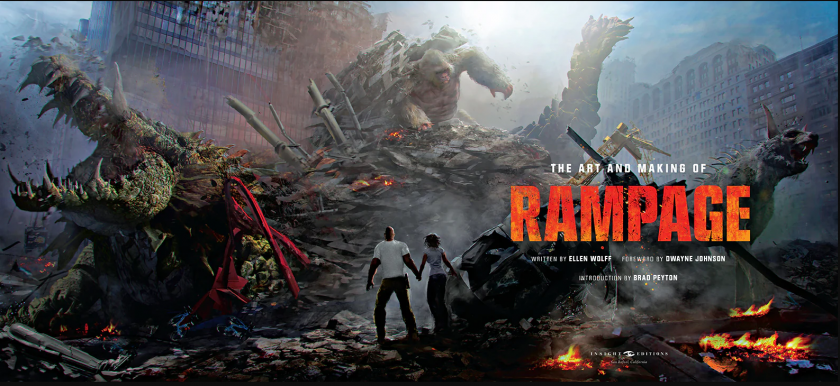
RGM: Going sort of on from that, obviously, fast forward a bit, you know, the Rampage movie. It’s not every day a creator sees their sprites turned into a 50-foot CGI behemoth. What was your honest first impression when you heard Hollywood was calling?
BC: Well, Hollywood didn’t call me. I saw online that they were making the movie 30 years after I came out with the game. My first thought was, this is great. Of course, it’s going to suck because all video games suck. But I sent a message to Warner Brothers and said, you know, I created Rampage and Rampage World Tour.
I can give you any background. And they kind of sent me a polite letter saying, “Don’t call us, we’ll call you”. But I got more excited when I saw The Rock attached. And then I got even more excited when I saw they were filming in Chicago. Because a casting director invited me to come be an extra.
And I thought, well, it doesn’t get any better than this.
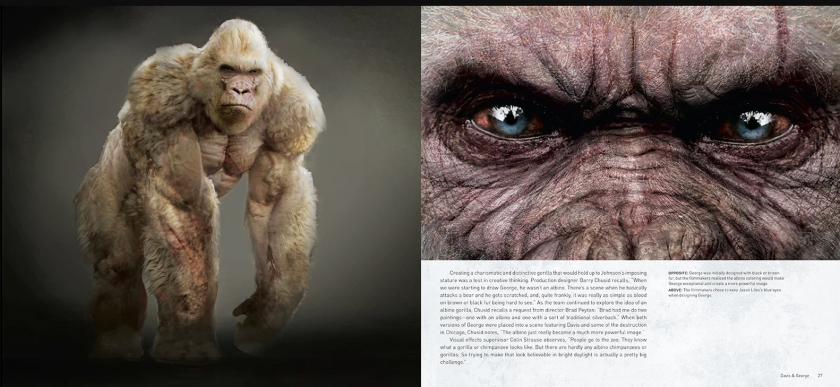
RGM: Well, that follows on to the next question anyway. You obviously spent some time on the set and filmed as a cameo. What was the atmosphere like? And did you have any pinch-me moments when seeing Dwayne Johnson interacting with the world you helped create back in 1986?
BC: If I could show you the bruises from the pinch me moments, they’d be all over my body. I got to be an extra. The assistant director found out who I was. They shot a cameo. I spent the whole day running away from the imaginary Sears Tower falling on top of me.
I got a call from the producer after that who said, Hey, you work for me. You want to come to the studio and meet everybody during the last week of shooting? I’m literally in the studio there. In the last days of shooting, they were so great to me. They treated me like royalty. I felt like a little kid among gods.
It was marvellous. I was taking a picture with the producers towards the end of one day, and The Rock was literally filming with Naomi Harris in one of the ending scenes in the movie. And we were far away, we were hidden behind some tents, so we wouldn’t disturb him in the middle of the scene. All of a sudden I hear, “…Stop, stop, I got to be part of this!”
He comes over. He was so great. I mean, everybody says he’s a nice guy. Honestly, he’s nicer than everybody says he is. He was tremendous.
My dimples ended up on the top of my head, I was grinning so hard. And standing next to him, I felt like I was 5 years old. I mean, I felt like he was 300 feet tall. And I’m going to stop on this because I’ll just keep gushing about it forever. It was wonderful.
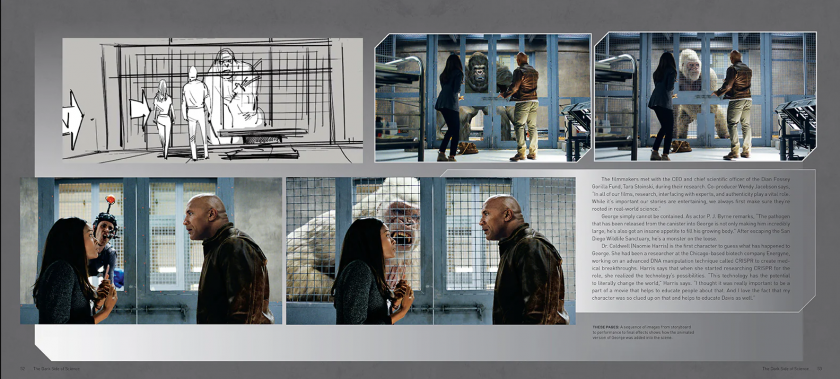
RGM: Oh, well, very jealous. Always been a WWE fan through the years, so it would have been great to meet such a legend in the wrestling world and obviously in Hollywood.
BC: But yeah, absolutely. Hollywood. My wife and I got to go to the premiere, and I had friends who saw test screenings who were saying, my cameo, my face is Huge on the screen and it just looked tremendous. So I’m at the premiere with my wife going, okay, here it comes, here it comes.
(Brian laughs) …it wasn’t there.
At the after-party, the producer, the first thing the producer says to me is, I’m sorry, Warner came in 3 weeks ago, and you ended up on the cutting room floor. So I never got to see the cameo. I have video of me shooting it from other extras, but I never actually got to see it. But that’s okay because they were great to me no matter what. It was wonderful.
RGM: Is it on the extras? Because I do own the Blu-ray. I’m going to have to check it out.
BC: On the Blu-ray special, they interviewed me, but they never did an extended cut.
Now you can see me in the background if you know that I was wearing – a business suit with a little briefcase. I’m a little in little scenes in the background, but I never got to see the extended cut because they never released one. I keep hoping the producer, one day, is going to see me complaining about it and send me that footage. We’ll see, we’ll see.
RGM: The sequel to Rampage you were involved with. Could you give us a little bit of information about that? And obviously, was it a bit easier to make it with a bit more powerful gear going forward? Enlighten us.
BC: Absolutely, it was easier.
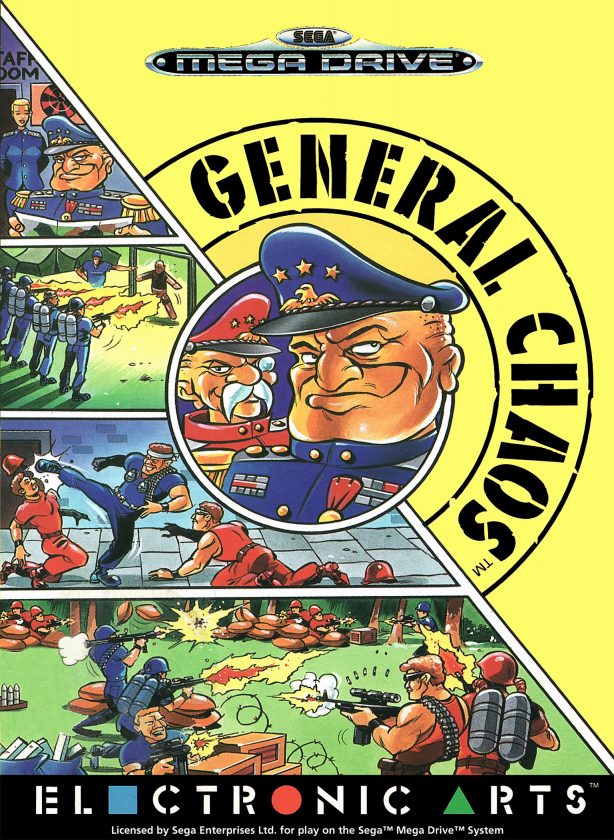
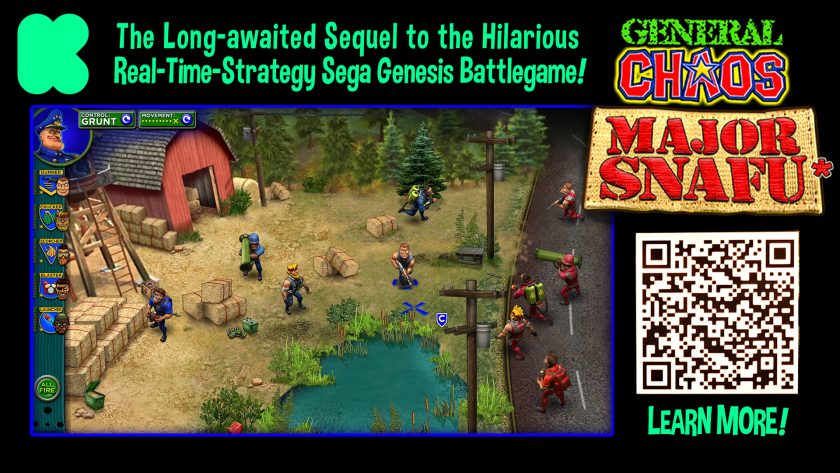
I always thought I’d never do a sequel, we had formed our own company by then, Game Refuge Incorporated, and we were doing games for EA. I did General Chaos for EA. I’m doing games for this company, but I was still doing games for Midway, and we were we were in a staff meeting and the head of their marketing said, We’ve got the 14-year-old male covered. We need something for a wider audience.
And my partner and I just looked at each other and said, OK, let’s redo Rampage. And they loved the idea. And finally, we could do all the hidden stuff and the secret stuff and the Easter eggs and the big ending that we couldn’t do in the original because we were pushing the original hardware to its limit.
But in Rampage World Tour, we could create 3D characters. They were spline-based models rather than just the little pixel stuff. And then we turned them into sprites. We touched them up. But we could do so much more.
And it was, …it was a delight to work on.
Now, it was different. You know, this is 10 years later.
Our original Rampage was just 3 guys. The animator, the sound guy and the programmer; Jeff Nauman, who was a designer in his own right. We were co-designers, basically, is how I like to think of it.
3 guys in 10 months; That’s what Rampage was.
Rampage World Tour was like, 16 guys, 6 or 7 artists, 5 or 6 programmers, and Jeff and I.
It was still a small group by today’s standards, a tiny group, but it was a lot more people giving of themselves to make Rampage World Tour,
Probably more people alive today know Rampage World Tour than know Rampage because It hit a younger audience, and even though Rampage was a hit on a lot of consoles in the early days, Rampage World Tour was copied almost frame for frame into the newer systems which could handle everything that we had in it.
RGM: I’ve been a fan of Rampage. I played in the arcades, but on my first home computer, ZX Spectrum, I used to play Rampage on that. With a limited palette on screen, there was no colour in Ralph, George or Lizzie, but it was in your imagination. I used to do that a lot back then.
BC: That’s right, imagination is the best thing. I mean, it’s kept me fed for the 44 years I’ve been doing this.
RGM: Well, all I can do is thank you on behalf of everyone else. It’s you who always puts a lot of joy on my face through the years. My son’s played it with me through the years, you know, the next generations.
BC: I love hearing that. You’ve got to know I love that.
RGM: Yeah, we’ve played World Tour through, also we’ve had some fun nights on that, me and my Son David. I think we could both talk about Rampage all night.
RGM: Tell us a little bit more about that, and maybe enlighten us a little bit about your making a sequel to General Chaos.
BC: Okay. Well, now you gave it away, so I don’t even have to say anything. (Laughs)
RGM: Oh, sorry.
BC: I’ll talk about it.
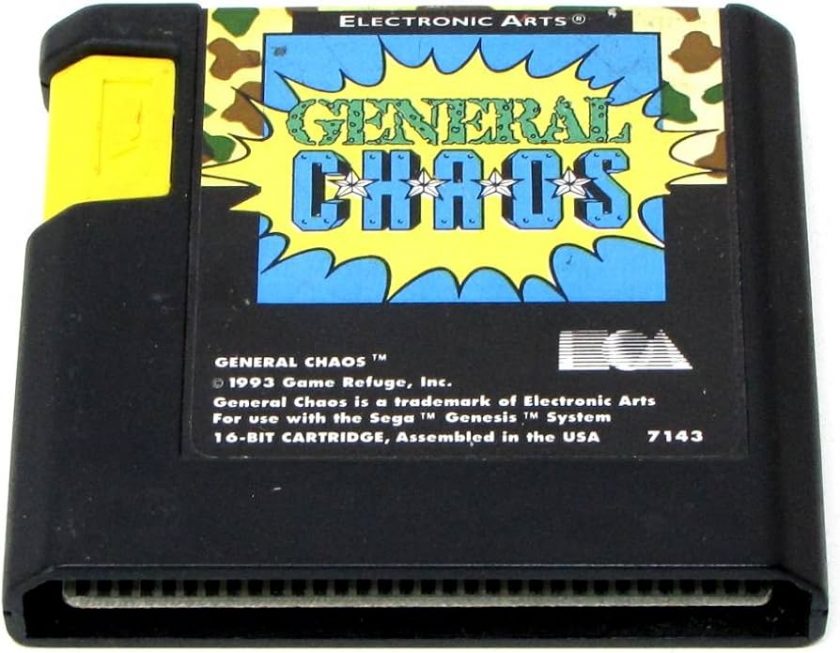
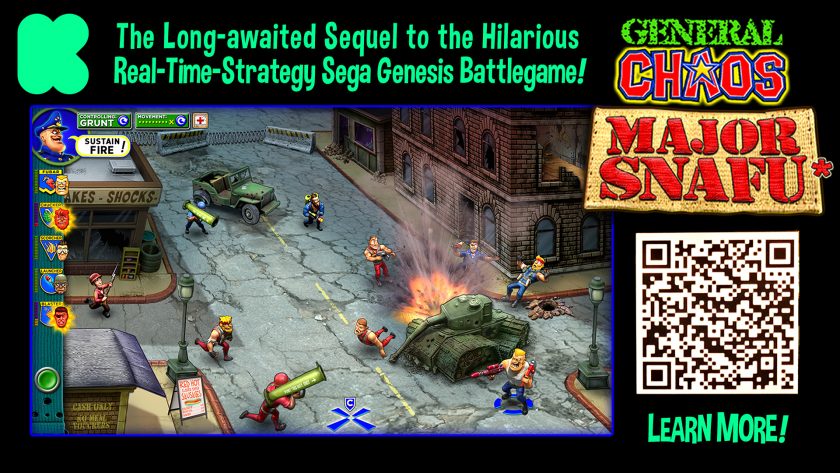
In fact, General Chaos was the first and definitely the funniest real-time strategy battle game…
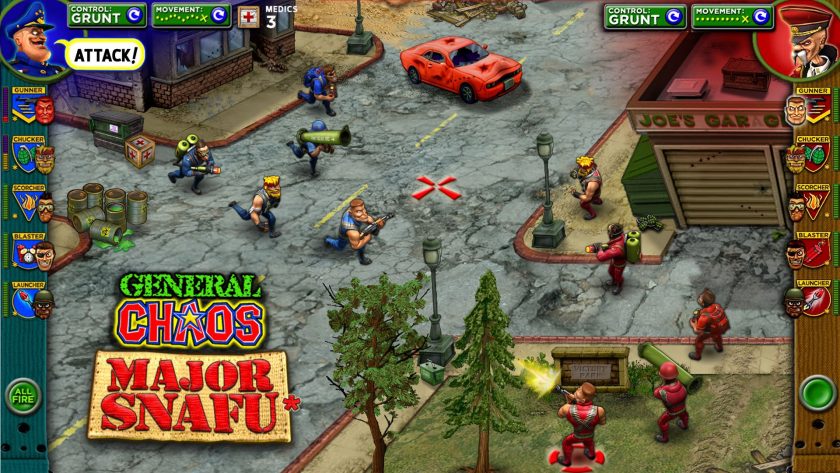
Unlike real-time strategy games that were tabletop games when I was growing up that had 300 pieces of cardboard that you had to set up for 2 hours, then you’re playing for another 4 hours before you even get into the battle. I wanted to do a game where the player controlled multiple characters at once and we jumped right into the battle; arcade-style. So even though it was a Sega Genesis game on the D-pad, you had to move this guy here, this guy here, this guy here, this guy here. And maybe in some battles, you could control the guy directly, but then you had to keep pressing your finger on that fire button. And in the meantime, either against the computer or against up to 3 other players, you were running around these little battlefields trying to do the most damage.
A battle would maybe last 3, 4 minutes at most, and then you’re on to the next territory, which you’d get to pick. And you’d get to start all over again. And you were trying to sweep across an entire continent back and forth as players won, as players lost.
The origin of General Chaos is also the origin of my company. I was working on a game, a multiplayer game called Pigskin at Midway , when I was asked to come work for EA, and I did not want to move to California because I had an acre, I had a nice wooded acre here in the Midwest US, and I knew I couldn’t afford that much land out in Silicon Valley. We went back and forth for a while, and remote work was not a thing back then. They wouldn’t hire me remotely. Finally, they said to me, what if we give you the money to start your own company? Then we can work together.
I was flabbergasted. I was, I mean, I was so lucky. I said, sure. My partner that I did Rampage with and Arch Rivals with, he and I left Midway on good terms, went out to EA, pitched them General Chaos, and that’s how it got started. I know you didn’t ask that, but I also told you I ramble, so I apologize.
RGM: Was that the Game Refuge company you started?
BC: That was Game Refuge. My company Game Refuge was formed because they wanted me to do games for them. And then General Chaos did very well in testing.
It’s one of the reasons I believe the 4-player adapter was even created by Sega Genesis because we were asked to do the 4-player multiplayer version, and it did great.
And 10 years ago, I started the sequel.
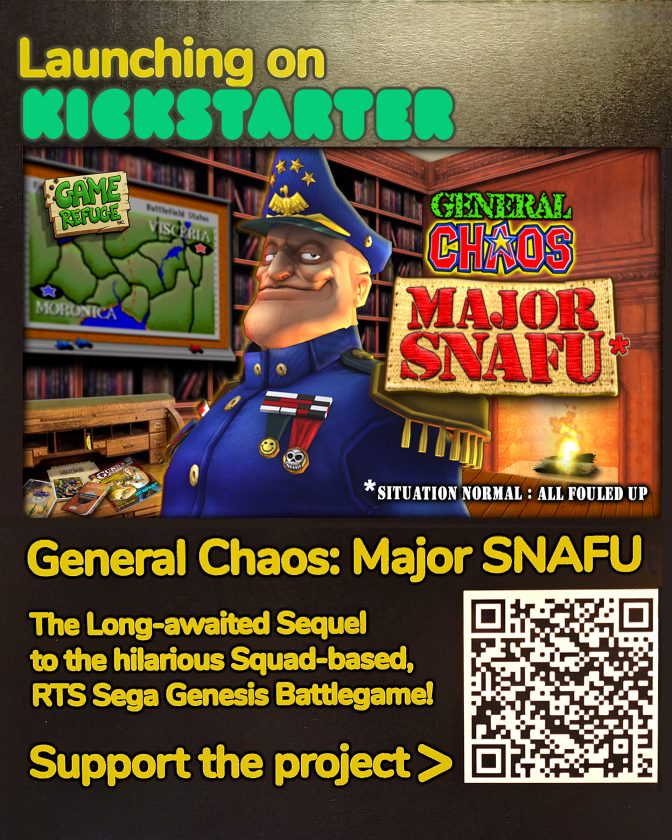
I decided the time was right. PCs were at the place where we could do everything I couldn’t do on the Sega Genesis. And I started a crowdfunder. I had a social media director at that time who booked me a multi-city tour that started with Kumail Emily, the Indoor Kids in LA. I’m getting on the plane to go on my very first podcast, live video podcast ever, and my doctor called and told me I had cancer.
RGM: Oh, that must have been tough.
BC: That was a little rough. It disrupted my company; it disrupted my life. I’m okay, things worked out very well, but it took a few years to kind of unscramble everything. And of course, that original crowdfunder didn’t reach its goal, because, you know, I couldn’t do any more promotion because I was otherwise occupied.
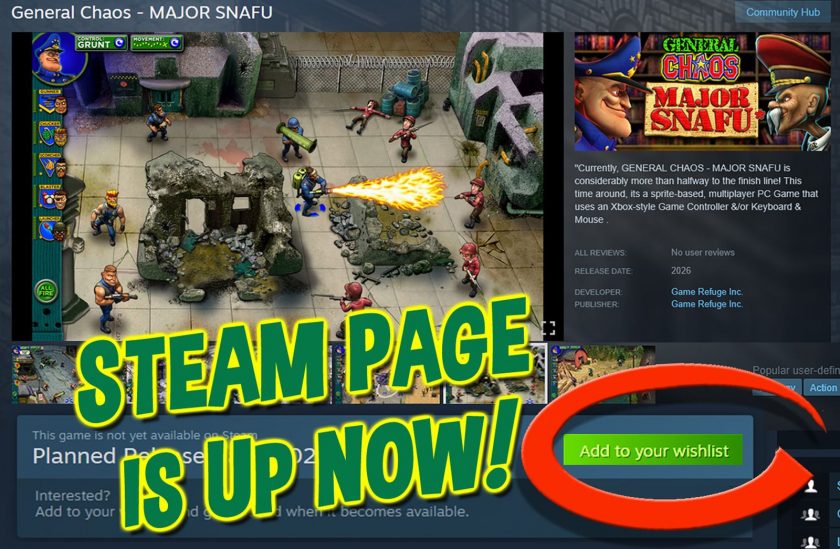
Click here to access steam
RGM: It’s great to see you’re healthy now and you beat it.
I’m doing great. 5 years later, when everything was stable again, and we still had nice offices, and I had a much bigger team than I’d ever had before, I decided the time was right again. I made the announcement to the world that General Chaos 2 was coming out … The week before the COVID pandemic was announced, and everybody had to go remote. Oh well…
So This time around, I’ve made no announcements; we just started on this. We’ve been working on it remotely for a few years now. It’s about three-quarters of the way done. There are literally like 11000 frames of animation that have been created,
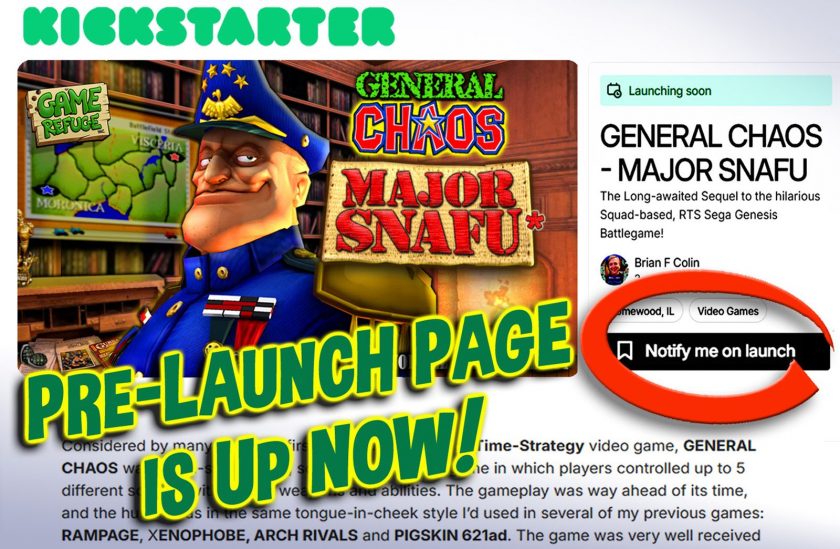
We’ve got about 75% of the game assets done, but we’re all still working remotely, so it’s taken longer than I want. I am doing a new crowdfunder, which is launching in just a few weeks, in which we’re going to be asking for enough money to bring the whole group into one office so we can finish this game in 6 to 7 months instead of before my grandchildren grow up.
When we’re all together, I’m going to have a great staff around me, veteran guys from the industry who’ve been making games like Big Buck Hunter and worked on games like NBA Jam, are going to be working with me. And then I’ve got a bunch of younger up-and-coming programmers and artists who are going to be working with me, and they’ll help me with my social media side because I’m the worst, and anything you can do to help would be much appreciated.
I’m a pretty good game designer. I’ve worked on over 90 games, but my ‘marketing game’ sucks.

RGM: Yeah. I’ll be happy to tap up as much marketing as I can on my side. Anything to help, I would be more than happy to do that.
RGM: How did the independent life compare to the high-pressure environment with the big arcade giants? Did it allow you to take more risks with your game concepts?
BC: It’s a different world, very much so. I’ve been lucky, indie groups today can tell you more about what it’s really like. I was spoiled because when I formed my indie company, I already had a reputation, so business came to me.
Its been pretty much full-time work for my indie company for decades.
Indie companies today have got to fight for everything. I won’t say I never had it, but I didn’t initially have the problems that indie companies have today, getting seen, getting recognised. There were fewer indie companies, and I was able to kind of not have to understand business because, again, I’m a good game designer, but I wish I’d taken more business classes in college. I can tell you that right now.
The indie world didn’t let me do what I wanted to do more… It did let me decide what I wanted to do because companies would come to me and say, “I want you to do this”. And it’s like, you know, that’s not anything I can bring anything new to the table. I like choosing games and projects where… “You want this? Oh, I can make that so much better than you want.”
That’s always been my driving force. It’s a different kind of challenge. On the same token, though, working for the big companies meant I didn’t have to worry about anything except making the game. So that was nice when I was working for big companies. It’s a trade-off.
You work for a big company; they have to worry about the business side. I can just concentrate on the games. However, when I’m the boss and it’s an indie company, I have to deal with all this other stuff where I just want to be working on the games. Yeah. It’s a trade-off.
RGM: Talking of a similar subject to that, you know, I enjoy some of the modern games, but I do feel more love for the smaller teams of the past. I feel the fun factor’s gone in modern games and they’re more like movie productions these days at the bigger studios, you know, and games come out bug-ridden and there’s always patches being made. In the past, we didn’t have updates or in-app purchases. What’s your view on the industry?
BC: Currently? I think you’ve summed it up well. As the video game industry grew, and that was even in the 10 years I was making arcade games, as we got more popular, they brought in more middle management. They bring in people that are saying, well, we don’t want to do anything different, let’s copy this game, let’s copy this game. And that’s why you get a lot of this stuff. They work on it for 4 years with 400 people working on it, where we could do a game in 11 months with 3 or 16 people.
It’s more like the movie industry. And I think one thing that people like that were playing games that I made in my early days, they were playing for a quarter, and they were in an arcade where they had to decide what they were going to do with the 75 cents or these half dozen coins that their mom gave them. And it made a difference if they put it in something and it made them smile. It gave them something they were going to remember for the rest of their lives. Once home games and console games came out, the companies didn’t care too much whether you cared about it after you started playing it …They just wanted to sell it. They got their money, they were done. Whereas an arcade designer, I had to make the operator, ( who bought the machine), happy… and he wanted kids off in 90 seconds. You,who were putting in the coin, wanted to live forever.
And it was my job to make you both happy.
And that was something I learned. You asked who the great guys were on my first day at Bally. George Gomez taught me that. It’s like, we’ve got two customers, the player and the operator. We have to make them both happy. For me, the solution was to make the player laugh.
That little naked person walking out of the Rampage screen and the other player going, “I’m going to eat him, Quick!”… But you know that you could keep your score if you got your quarter in quick enough, that’s one of the reasons, by design, that was there. It made kids stay on the game, get that next coin. We’ve done that for a lot of the games we’ve made over the years. And we could spend another hour talking about just those little wonderful things we put in there to get that next point, get that player to laugh.
RGM: What were your all-time favourite games and favourite console if you had one, or computer?
BC: And again, this surprises a lot of my fans because they will ask me about old games. And the truth is, when I was growing up, I had a Magnavox Odyssey, which was on your TV at home. And all I ever played on that was Pong. And even on that, because it was black and white, you had to put a translucent screen, stick a piece of film onto your TV to turn it green so it looked like tennis.
RGM: I saw one of them at a retro expo.
BC: Growing up. I played in a sandbox. You know, maybe that’s where Rampage came from. You know, I’d set up my army men, build little sandcastles, and then I’d stomp them into the ground.
I didn’t play video games. I played a little pinball in college; and that was in the early ’70s, well, mid-’70s. But that’s why I wasn’t particularly interested in getting the job when I got it. I think the only game I had played as an arcade game was one called Gunfighter. And that was about it. I didn’t really play games until I was playing them, the ones we were working on.
Because the beautiful thing about being an animator starting in 1982 is that I wasn’t just working on Discs of Tron. I was working on 3 or 4 games at once. There were 7 or 8 programmers, but only 2 or 3 animators. I got to work on Discs of Tron and Spy Hunter and Kozmik Krooz’r. And I played games while I was developing them from early in the morning till late in the evening because I lived an hour and a half away from the factory.
I would never go in at rush hour or come home at rush hour. I had a cot under my desk, and at work I would sleep overnight there some nights, you know, because it was easier for me to stay and work and have fun.
I always played games for fun at work, or if I was in an arcade checking out the competition, and then I would find fun ones ike Ghosts ‘n Goblins.
RGM: I love that. Oh, it’s a phenomenal game. I love that. Yeah, difficult game.
BC: There were games from time to time that I would play, but I was not a game player. Really, my fun was making them. And that’s why games like Rampage, part of the reason Rampage was designed the way it was, is because I was not a skilful player. I didn’t really ‘get’ video games at first.
Discs of Tron was great. I had fun doing the animation, which made it a little friendlier for players like me, with my design elements that the programmer put in that I recommended. But games like Spy Hunter, I really got into. Okay, I finally got it when people are saying “…they’re in The Zone”.
… I’m driving, and I’m backing out of the weapons truck, and I’m loaded with stuff, and I think I’m going to live forever… I’m in The Zone! And then, BAM, you know.
So Rampage was designed for people like me who may not be very skilful, but I still want to have fun. I designed it so you can pretty much play it any way you want to. You can compete with the other guys, you can go for the score, or you can just go see what you can do or how fast you can knock stuff down.
There’s no wrong way to play Rampage.
And I think that’s why it had such a broad appeal. Some people could play for a high score, some people couldn’t. So unfortunately, in terms of favorite console retro games, I really don’t have that many. I mean, if you mention one that I like, that’ll remind me, but I didn’t really have that many that I was playing what you would consider retro.
I started getting into Wolfenstein as a PC game.
RGM: Yeah.
BC: That was an awesome game in its time. I love that game. But you know why I love that game? First, it was doing something that it shouldn’t reallydo because it wasn’t really 3D.
It was faking it, which I liked. And they had a level editor. I used to challenge the guys in the office, everybody goes home and makes a level. And next week we’re going to see whose level did the best. And I found a way to get employees of mine to think about level design, even though their job might just be this or this or this.
But when everybody’s thinking about how to make the game better, that makes every game better. Everybody in the team has got to be thinking whats best for the player rather than just what I’ve got to do. And games like Wolfenstein or the Doom level editor, that’s when I started getting into games because they were multiplayer games. And at 3pm in the afternoon on Friday, we’re all knocking off, we’re going to play your level, then your level, and your level for the rest of the afternoon and well into the evening. That’s when I got into games more, and that was after I formed the company, which probably wasn’t until the ’90s.
RGM: For all the tech heads out there, what was the first kit you developed games on?
RGM: Working with such tight memory and hardware restraints back then, did you find it a struggle, or do those limitations force you to be more creative with your designs?
BC: Yes, absolutely. In the early days at Midway, it was proprietary hardware. When I first started, they had a poorly designed art tool and if I wanted to make a colour, a particular colour, I had little teeny thumb wheels that I would have to scroll up incrementally…1, 2, 3, A, B, C… for each pixel. It was horrible. (and painful)
But shortly after I got hired, they hired an art tools developer. And when we had a trackball, it was literally a bowling ball from a Midway bowling game, a real bowling game. My trackball was huge. It was wonderful to work with. You could never buy anything like that in a store, because just moving my finger the tiniest bit gave me the best precision.
The new art tools, even though they were made in the back room there, were the best. And then once we got away from that and had to work with other companies’ toolkits. Typically, they would use Garage Games Engine, which had some great features
The stuff they made for us was better for me, but it was much cruder technology. And the cruder technology worked for me because it gave me something to push against and Think: “I got to figure out a way to do this”
And that was usually less about the tools. Sometimes it was about their proprietary game engine. I can’t do this. Okay, figure out a way to do what the client wants or what I want to do with the game with this limitation. Limitations… I never think of them so much as limitations as, okay, this is something I got to find a way around.
I have had clients who hired me, and I say, “…what do you want to do?” And they say, well, we can do anything. And it’s like, that doesn’t help me.
Give me a box to push against. Who’s your audience? What do you want to spend? When do you need it? Give me some restrictions so I know what I can do to give you more than you want.
RGM: You brought a very distinct animator’s touch to the industry in those early days. Was it difficult to convince the suits and the programmers that the character personality and fluid movement were just as important as the code itself?
BC: I never really had to, even though in the early days there wasn’t middle management and I could jump right up to a head executive’s office, I didn’t have to do that much. I was very lucky. I was, I was focused on games. The people around me, would relay ideas up to management on a regular basis, would run upstairs and say this has been suggested …Can we do this? So it wasn’t that much of a problem back then.
Nobody was basically saying, Brian, you’ve got to change your artwork, or Brian, you can’t do that. Not unless I was asking for something that cost money
RGM: Beyond Rampage, you had your hand in so many cult classics like Arch Rivals and obviously General Chaos, as I said. If you had one hidden gem from your career that you feel deserves a modern remake, which would it be and why?
BC: Oh, from my career now, not just arcade games then. Yeah. Then from my career back in the early 2000s, like I said, I was, you know, in the late ’90s I’m playing more, Wolfenstein and Doom and then later, you know, Quake and some of these LAN games that were a lot of, you know deathmatch sort of things. I love playing them, and especially in an office on a LAN where you can hear the screams of your co-workers.
But I didn’t like the fact that deathmatch games were all about… – again, I’m not a very skilful player, so if there’s a sniper out there, I’m going down.
So I came up with something that came out of a patent I came up with for the gaming industry, and I turned it into a Reathmatch, Racing, Full-Contact Poker game, with players riding on heavily-armed rocket-powered snowmobiles, in a perpetual winter, in a Cthulhu Mythos Reality called: Arctic Stud Poker Run.
And I think it is the most fun game I have ever made. Even though we only sold about 100,000 copies, that is the game I would love to see come out again.
RGM: Was that on a console?
BC: It was a PC game.
It was a multiplayer PC LAN or an internet multiplayer game.
You should check it out: Arctic Stud Poker Run, it’s a hilarious game. Look at my YouTube channel. The resolution was only about 800 by 800 back then. But you’ll get a feel for it if you look at it on my YouTube channel.
RGM: I’ll have to check that out. Talking about, you know, different computers and that.
RGM: Do you still have any current consoles? And if so, what’s your favourite game on your current or most current console or computer you own?
BC: You know, I’m in my 70th year, so my kids are grown adults now, and I relied on them and/or the younger people I work with to tell me what I need to go check out. I don’t have any new consoles. I haven’t bought a console since my Sega Genesis, which I used to develop General Chaos. I haven’t played a console game in years. You know, I had the arcade games in my basement, even ports of my games that went to PC or consoles.
I have played some of the Midway classics on my son’s PlayStation or my son’s Xbox.
I’m more comfortable with PC games… better with WASD and my fingers and buttons. t. I can’t do anything with two Joysticks to save my life.
RGM: I used to be a PC gamer, then PC gaming got expensive, and then I went to the console, adapted, but I still enjoy PC gaming.
BC: That’s the thing. You finally get to that age where your spare time is filled with everything else. And like, I’m still making games. Most of my game days are spent checking problems, testing games, working on something.
I’m doing that from 9 in the morning till 7 at night, you can imagine that sitting down in front of a game in my free time, and there’s very little free time with 2 new grandkids running around every day. I’m not going to spend it playing some other games most days. And that’s the way it’s been for most of my career. I have fun making games. At night, I want to go walk through the forest preserves for 5 miles out and back. I want to go canoeing. I want to go get a beer at the local pub. I’m not doing much gaming these days in my spare time.
RGM: Well, when you have been gaming, is there a game that you’d say is the worst game you ever played? It could be in the arcade, could be anywhere, that you thought was the worst game. Mine was a game called Rise of the Robots. I don’t know if you’ve heard of it. It was out on many platforms, a bad fighting game. Marketed as the best fighting game coming out, and it was the biggest lemon that was released.
BC: I played a lot of bad arcade games. I couldn’t pick the worst. I walk away when I’m not seeing what I want to see. Back when newer games were coming out and I was still younger, the one I would probably single out as the worst, and I know it’s not the worst, but the one that disappointed me the most was Half-Life … because it was one of the first games that hooked me in completely. And I’d play for weeks and weeks and weeks. Again, after a long day of making games, I had the laptop up in my bedroom. My wife would be in bed, and I would be playing till the middle of the night. And then by the time I got to the end of the game I thought: “Okay, I will never make a game like this because it it hooked me in, but it disappointed me ultimately because it took me weeks and weeks to play… and for me, the payoff wasn’t good enough. It took me a week and a half to beat that last boss… I didn’t understand why it didn’t make me happy and fulfil me. It was just like, “I’m glad I’m done with that”.
I’m picking on Half-Life. Don’t blame me, people, because I know it was a great game, but I’m picking on that one just because of the way I felt about taking that long with a game, …which I did voluntarily.
But that was the game that convinced me I’ll never make a game that takes you this long to play. I’m going to stick with little, short, fast. And if I love it, I’ll play it again. If I don’t, I’m never going back.
RGM: If you were handed a blank check and the modern hardware today to create a brand-new Rampage experience, what would Brian Colins’ version of the next-gen Monster Mash look like?
BC: Okay, if we’re talking specifically about Rampage, after I did Rampage and Rampage World Tour, I was asked to do a third Rampage. I did a demo of a multiplayer PC-based LAN game where every player was one of the characters on their own computer and other characters as well. And that started at the end of Rampage World Tour, where you’re on the Moon and you get shrunk down to the.
Dr. Betty takes them back to Earth, puts them in little hamster cages, and you got to break out and eat and grow and eventually get to kaiju size. And you were fighting other kaiju monsters. Picking up tanks and using them to shoot. And that was my vision for Rampage 3.
And Midway Games said, “No, we just want you to add another character and do the exact same game again”.
RGM: It’s a shame.
BC: And I said, ” You know what? Not interested; anybody can do that”.
And I thought: “You’ll come crawling back to me, we’re going to do this one”.
Well, they never came crawling back to me, obviously. Like I say, I’m a good game designer, but I’m not a good businessman. I should have stayed with the franchise, but after doing the game twice and all that, when they said, no, we just want you to add a new character, it’s like, that’s not going to be as much fun. This is the game I want to make, but they said no.
If I could do a new Rampage and I was given unlimited money, that would be the version I would do. I would be interested.
RGM: Shame that obviously when the film didn’t come out that they didn’t have a tie-in, a movie version of Rampage as an arcade game. Would have been quite interesting, maybe sort of doing models of the creatures in the film into the form of the game. But that’s just me thinking.
BC: I think I knew when they said it was coming out, it wasn’t going to be my game, my silly, goofy cartoon game. I knew that I was happy with what they did. They kept the heart in George. And I don’t know if we talked about this in that game behind you. When that game starts, the little photographs of George, Lizzy and Ralph, the human versions. Yeah. I was George. My wife was Lizzie.The programmer, Jeff Nauman, was Ralph.
RGM: Oh, I never knew that.
BC: And the fact that in the movie with The Rock, they kept the heart in George, Ralph the humanity, that made me feel good about the movie. I didn’t want it to become just a kaiju movie.
So that was why I liked the movie, I liked where it ended up. But yeah, it would have been fun to see one that had the actual 3D cartoony characters. That would have been great. I mean, I would have loved to just see when you punch through the window, see the guy in the bathtub, you eat him. And if you punch again, you know, you get squirted in the face. That was still one of my favourite bits of the video game are all those little hidden surprises inside. Oh yeah, eating people is very enjoyable in the game. Always was.
RGM: Thank you for your time. It’s been an absolute pleasure, and thank you for all the memories. Wonderful.
BC: Thank you for staying up late. I know it’s a little time difference here, so I really appreciate you making it easy for me to do.